Clay pigeon shooting blends skill, timing, and focus into a fast-paced, rewarding sport. Whether you’re preparing for your first round or aiming to sharpen your competitive edge, understanding the fundamentals can make all the difference. From choosing the right shotgun to refining your stance and lead, this guide breaks down the techniques and equipment that set successful shooters apart.
What Is Clay Pigeon Shooting?
Clay pigeon shooting is a sport that simulates bird hunting by launching clay targets into the air for shooters to hit. The term “clay pigeon” comes from the targets’ original use as substitutes for live birds. Today, it’s a widely practiced sport across recreational clubs and competitive arenas.
There are three main styles:
Trap: Targets fly away from the shooter at varying angles.
Skeet: Targets cross paths from two fixed towers at either end of a semicircle.
Sporting clays: Offers the most variety, simulating real hunting conditions with unpredictable trajectories and speeds.
Each discipline teaches a unique skill set, but all require strong fundamentals in shotgun handling and target tracking.
Choosing the Right Shotgun for Clay Shooting
Your shotgun should feel like a natural extension of your body. Fit, balance, and action type all matter.
Over/Under Shotguns: A popular choice in sporting clays and skeet for its consistent barrel alignment and reliability.
Semi-Automatic: Known for lower recoil and faster follow-up shots.
Pump-Action: Less common in competitive clay shooting, but still functional for practice and beginners.
Gauge Selection
Most shooters use a 12-gauge for its wider shot pattern and power. A 20-gauge may be better for smaller shooters or those looking for reduced recoil.
Barrel Length & Chokes
Longer barrels (28″–32″) help maintain a smoother swing. Interchangeable chokes allow you to control shot spread depending on distance and target type.
Fit Matters
Gun fit affects everything from recoil management to shot accuracy. A professional fitting can fine-tune stock length, drop, and cast for your body type.
Essential Gear for Clay Shooting
Besides your shotgun, you’ll need a few basic items:
Eye Protection: Prevents injury and helps track targets under changing light conditions.
Ear Protection: Use foam plugs or electronic muffs to protect your hearing.
Shooting Vest or Shell Pouch: Keeps shells and spent casings organized.
Ammunition: Target loads with #7.5 or #8 shot are typical. Always follow range rules for shot size and velocity.
Extras: Shooting gloves, recoil pads, and tinted shooting glasses can improve comfort and visibility.
Clay Shooting Technique Breakdown
1. Stance and Mounting
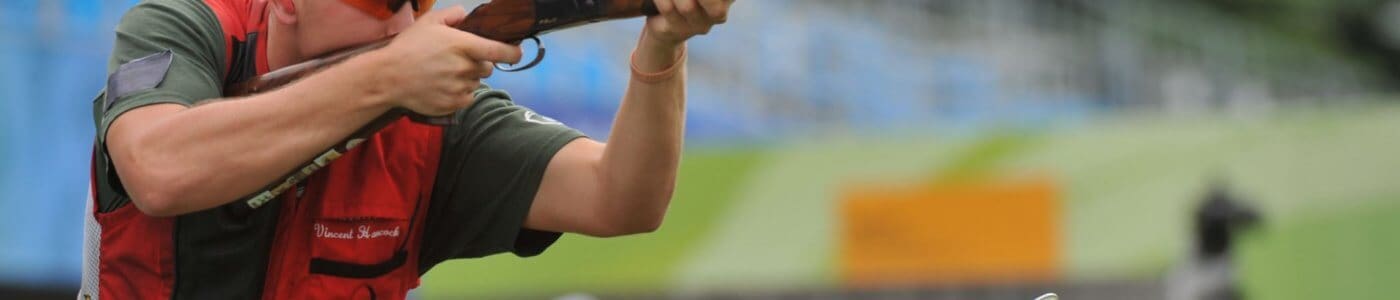
Start with your feet shoulder-width apart, leading slightly with your non-dominant foot. Your weight should be forward, knees slightly bent. Consistency in your gun mount—bringing the stock to your cheek and shoulder in one smooth motion—is key. Practice your mount often to build muscle memory.
2. Target Acquisition and Tracking
Keep your eyes on the target, not the bead of your gun. This approach trains your instincts to guide the barrel naturally. Move the shotgun smoothly along the path of the clay. Avoid jerky motions or locking your body.
3. Trigger Control and Follow-Through
Don’t snatch at the trigger. Apply steady pressure and keep the barrel moving after the shot. Many misses happen when shooters stop their swing too early.
Understanding Lead and Timing
Clay targets don’t wait. Hitting them requires anticipating their movement.
Crossing Targets: Lead the clay by several feet, depending on speed and distance.
Incoming or Outgoing Targets: Less lead is needed, but timing becomes more critical.
Rising or Falling Clays: Adjust both vertical and horizontal aim, especially when shooting at different elevations.
Experiment with different shooting methods:
Swing-Through: Start behind the target, pass through it, and fire as you continue swinging.
Sustained Lead: Keep your barrel ahead of the target and maintain that lead before firing.
Pull-Away: Start on the clay, then move ahead and shoot.
Choose the method that feels most natural and repeatable.
Common Mistakes (and How to Fix Them)
Even experienced shooters fall into these traps:
Rushing the Shot: Take a breath and allow the target to appear before moving.
Aiming Instead of Pointing: Shotguns are about fluid motion, not precision aiming.
Inconsistent Mount: Practice dry mounting to make your setup second nature.
Stopping the Swing: Follow-through is non-negotiable. Keep your barrel moving through the shot.
Mental Game and Focus
Clay shooting requires just as much mental clarity as physical precision. Here are a few ways to stay sharp:
Relax: Tension stiffens your swing. Breathe and settle into each shot.
Visualize Success: Picture the clay breaking before you call “pull.”
Stay Present: Focus on one target at a time. Don’t let previous misses shake your confidence.
Practice Strategies That Work
Consistency builds confidence. Here’s how to get the most from your training sessions:
Dry Mounting at Home: Use an unloaded shotgun to practice your mount and stance.
Laser Trainers: Visual tools that help reinforce swing path and follow-through.
Dedicated Drills: Focus on one type of target at a time. Track your hits and misses.
Frequency: Practice weekly if possible. Short, focused sessions often outperform long, unfocused ones.
Clay Shooting Etiquette and Safety
Every shooter shares responsibility for safety and respect at the range:
- Always keep your shotgun pointed in a safe direction.
- Only load your firearm when you’re in the shooting stand and ready to fire.
- Use ear and eye protection at all times.
- Wait for your turn and communicate clearly with your squad.
- Report any misfires or gun malfunctions to a range officer.
Clay pigeon shooting combines accuracy, timing, and control. Whether you’re drawn to the challenge, the community, or the fun of watching clays explode midair, the fundamentals matter. With the right shotgun, proper technique, and steady practice, you’ll see improvement and gain confidence with every pull of the trigger.
Looking to get outfitted for the range or upgrade your current gear? The team at Sporting Systems can help you find a shotgun that fits your goals and experience level. Visit us today to explore high-quality firearms and expert advice.
FAQs About Clay Pigeon Shooting
What’s the best shotgun for a beginner?
A 12-gauge over/under or semi-automatic with a proper fit is a great place to start. Look for lightweight models with manageable recoil.
How fast do clay pigeons fly?
Trap targets can reach speeds of 42–50 mph. Sporting clays vary widely in speed and angle.
Can youth participate in clay shooting?
Yes, with supervision. Many ranges offer youth programs with lighter shotguns and instruction tailored to younger shooters.
What’s the difference between trap and skeet?
Trap features clays launched away from the shooter at varying angles. Skeet targets cross from side to side in a predictable pattern.
Looking for a new shotgun specifically for clay pigeon shooting? Our selection at Sporting Systems is unmatched. Come visit us today to see what options we have!